
I spent twenty years on that floor, in London and then the Gulf, mostly in watches and jewellery. I don’t think the sameness is people failing to try. They try hard. The problem’s somewhere else, and it’s the part the industry would rather not name.
The floor sells. It doesn’t translate.
Then it gets shipped to a floor in Dubai, where the customer might be Emirati, or Saudi, or a visitor from any of the hundred-odd nationalities that move through the city in a week. None of them were handed the dictionary.
The advisor’s real job, the one almost nobody trains them for, is to translate. To read the person in front of them, and then tell the brand’s story in a way that actually lands for that person. Most don’t translate. They recite. And a recital, however word-perfect, is the one thing a customer who came in to feel something will never remember.
Why this is harder in Dubai than almost anywhere
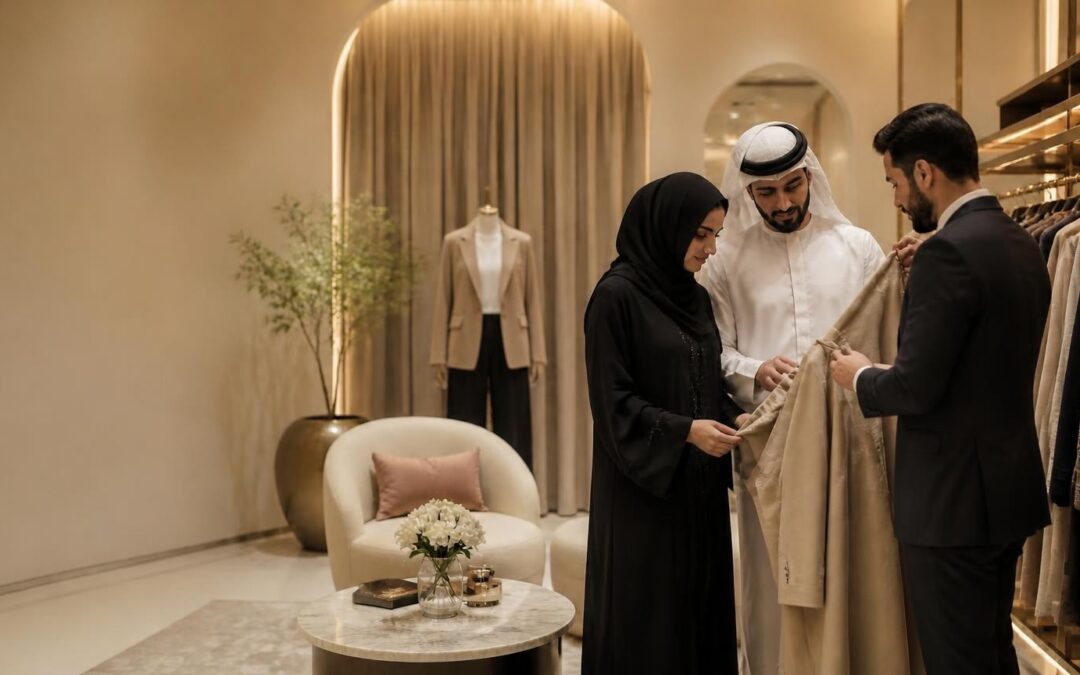
In the first eight months of 2026, the city took just under seven million overnight visitors. They didn’t arrive as one customer. They arrived as hundreds of versions of one, each with a different language, a different idea of what respect looks like, a different reason for buying at all. A resident Emirati. A Saudi family in for the weekend. A European tourist. A long-settled expat who’ll buy the same piece cheaper on their next trip home. Same shop, same sofa, four completely different conversations.
Most training treats all four as “the luxury client.” It hands the advisor a script, a set of standards, a ceremony, and sends them out to perform it the same way on everyone. On a floor this varied, the same way is the quickest route to forgettable.
Everyone’s selling the same three words
That’s because these are being taught as techniques. A script for “personal.” A checklist for “connection.” But you can’t perform your way into making someone feel understood. Personalisation isn’t a set of moves. It’s a standing, the right, earned in the first moments, to be met as an equal instead of handled as a transaction.
That’s the gap. The industry’s drilling the what. Almost nobody’s teaching the how.
What a translator actually does
First, you change the advisor before anything else. A salesperson is trying to move a product. A translator is trying to carry a meaning. They’re different jobs, and the second one can’t start until the first is unlearned. Most of the resistance in any training room is right here, because you’re not teaching a new skill, you’re asking someone to stop doing the thing they got praised for.
Then there’s the work itself, and it runs in two directions at once. The advisor reads the person in: who they are, what they’re really here for, the mood they walked in with, who in the group actually decides. And the advisor carries the brand out: the heritage and the craft of it, re-told in terms that land for this particular person. In their own language, not the brochure’s.
Here’s one that stuck with me. I watched an evaluator leave a boutique knowing more about the sales advisor than the advisor had learned about them. The client had been warm, curious, full of openings. The advisor, drilled to the hilt on the product, answered every question about the piece and asked almost nothing about the person. Nothing went wrong. Nobody complained. It was just a sale that quietly died, and the advisor never knew it had.
Done well, the opposite happens. The customer never feels sold to. They feel understood, and the brand feels like it was made for them. That’s the difference between a shop they pass through and one they come back to.
Why this matters more in a quiet year
It’s been a turbulent year for the Gulf. Arrivals through Dubai dropped sharply in the first half of 2026, and the regional luxury consumer base shrank somewhere between 15 and 25 per cent in the early months. The crowds thinned. The floors didn’t empty, but the easy traffic that forgives a weak interaction mostly went away.
When footfall’s high, a brand can carry forgettable service, because there’s always another customer walking in. When it drops, every encounter has to count. The advisor who can translate keeps the client. The one who recites watches them leave, often to buy the very same thing abroad.
A quiet floor doesn’t reward a better script. It rewards the person who can actually read the person in front of them.
The shift, in one line
And it starts from one idea. The advisor isn’t a salesperson. They’re the last few feet between a great brand and a human being, and their job is to read the person, then tell the brand’s story in their language, until it feels like it was made for them.
If that’s the gap on your floor, that’s the work we do.
Common Questions
What is Translational Luxury?
It’s the idea that a luxury brand is a language, and on a floor as diverse as Dubai’s, someone has to translate it for each customer instead of reciting it at them. The advisor reads the person, then carries the brand to them in terms that land.
Why do luxury customers in Dubai all get the same experience?
Because most training teaches one script and one ceremony, then has staff perform it identically on a floor of two hundred nationalities. Sameness isn’t a lack of effort. It’s what happens when a brand gets recited instead of translated.
Is luxury sales training still worth it in a slower market?
More so. When footfall drops, every customer matters more, and the quality of each interaction is what keeps the client from buying the same piece abroad. A slower floor rewards skill, not scripts.
What’s the difference between a salesperson and a translator on the shop floor?
A salesperson is trying to move a product. A translator is trying to carry a meaning: reading the customer first, then telling the brand’s story in a way that fits that specific person.